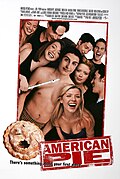
From American Pie to DILF: The Evolution of the MILF Term
The landscape of modern language is a dynamic tapestry, constantly weaving new threads of slang, abbreviations, and cultural shorthand into its fabric. Among these, few terms have undergone as significant a transformation and sparked as much discussion as "MILF." What began as a provocative, niche abbreviation in the nascent days of the internet has evolved into a widely recognized, albeit still sometimes controversial, cultural phenomenon. Understanding its journey from the silver screen to everyday lexicon, and its expansion into terms like "DILF," offers a fascinating glimpse into societal attitudes towards age, attraction, and pop culture's undeniable influence.
The Genesis of a Cultural Phenomenon: Unpacking "Milf Bedeutung"
To fully grasp the term's evolution, we must first delve into its origins and fundamental meaning. The abbreviation "MILF" stands for "
Mom I'd Like to F***." While the explicit nature of the full phrase might be startling, its less vulgar interpretation often translates to "a mother with whom I'd like to have fun." This direct and overtly sexualized connotation was central to its initial impact.
Before its mainstream explosion, the term circulated primarily within specific corners of the American internet and burgeoning online communities. It was a provocative descriptor for an attractive, older woman, often, but not exclusively, one who had children. The allure lay in a combination of maturity, perceived experience, and an undeniable physical attractiveness that appealed to a younger demographic. The initial
Milf Bedeutung was clear: it designated a particular type of sexually desirable older woman, challenging conventional age-related attraction norms with a bold, often humorous, bluntness.
This period was crucial for the term's incubation. It festered in subcultures, gaining traction precisely because of its taboo nature and its ability to concisely capture a specific fantasy. Without this foundational understanding of its raw, provocative core, its later journey into popular culture would make far less sense.
American Pie and the Mainstream Explosion of "Stifler's Mom"
The trajectory of "MILF" changed irrevocably in 1999 with the release of the iconic teen comedy,
American Pie. This film served as the primary catalyst, propelling the term from obscure internet slang into the global mainstream. The character responsible for this cultural shift was none other than "Stifler's Mom," portrayed with magnetic charm by Jennifer Coolidge.
Stifler's Mom embodied the nascent concept of a MILF perfectly: a woman of middle age, sophisticated, confident, and undeniably sexy. Her allure to Stifler's teenage classmates, particularly Finch, became a central comedic thread in the movie. The memorable scene where the boys discuss her in hushed, reverent tones, culminating in the explicit utterance of "MILF," etched the abbreviation into the collective consciousness. The film didn't just use the term; it dramatized its impact and appeal, making it relatable (and aspirational) for a generation.
The immediate aftermath of
American Pie saw "MILF" explode in popularity. It wasn't merely a film reference; it became a shorthand for a specific archetype in popular culture. Magazines, talk shows, and subsequent media quickly picked up on it, cementing its place in the everyday lexicon. The film provided the crucial visual and narrative context that made the previously abstract internet term tangible and widely understood, redefining its
Milf Bedeutung for a broader audience.
Beyond the Mother Archetype: Expanding the MILF Universe
Once embedded in pop culture, the term "MILF" began to evolve beyond its initial, rigid definition. While its core meaning still revolved around an attractive, older woman, its application broadened. It was no longer strictly limited to mothers but could refer to any older, alluring woman, often with a hint of maturity and experience. This expansion softened its edges somewhat, allowing for more playful and less strictly provocative usage, though its inherent sexual connotation always remained.
This evolution also paved the way for the emergence of parallel terms, marking a significant expansion of the "MILF universe":
*
DILF (Dad I'd Like to F***): Recognizing the parallel appeal of attractive, older men, the term "DILF" emerged as its male counterpart. Just as MILFs are celebrated for their mature charm, DILFs are often seen as embodying experience, responsibility, and an undeniable masculine appeal. This symmetry highlights a broader cultural appreciation for attractiveness that transcends youth. The rise of the DILF signified a more inclusive acknowledgment of mature desirability across genders.
*
GILF (Granny I'd Like to F***): Taking the concept even further, "GILF" applies the same appreciative, if still provocative, label to grandmothers. This term pushes the boundaries of age and attraction, challenging traditional notions of desirability.
These extensions demonstrate a natural progression of language, where a successful concept is adapted to similar contexts. Furthermore, the term "MILF" and its derivatives found a significant foothold in the pornography industry, where it became a popular category. This adoption further normalized the term and solidified its role as a descriptive tag for a specific demographic and fantasy, albeit in a context that often magnifies its objectifying aspects.
For a deeper dive into whether the term is appropriate in modern discourse, explore our article:
Is 'MILF' Offensive? Understanding Its Controversial Usage Today. To fully grasp the core meaning and cultural impact that solidified its place in pop culture, read more about the
MILF Meaning: Unpacking Its Origin & Beyond.
Navigating the Nuances: The Ongoing Debate and Modern Etiquette
Despite its widespread recognition and humorous applications, the term "MILF" remains contentious. Its inherent nature reduces women to their physical appearance and, often, their maternal status, leading to legitimate criticisms of objectification and sexism. Many women find the term demeaning, viewing it as an insult rather than a compliment, precisely because it frames their worth solely through a sexual lens.
Understanding this nuance is crucial for anyone using or encountering the term today. While pop culture has mainstreamed it, personal perception varies wildly:
*
Context is Key: In informal settings among close friends who share a specific sense of humor, the term might be used playfully. However, in professional environments, with strangers, or in any situation where respect is paramount, its use is highly inappropriate.
*
Relationship Matters: Only in established, consensual relationships where both parties understand and are comfortable with such language might it be acceptable. Even then, discretion and mutual respect are essential.
*
Individual Preferences: Perhaps the most critical factor is the individual woman's perspective. What one person might brush off as harmless, another might find deeply offensive. There's no universal acceptance, and assuming it's a compliment is a social misstep.
*
The Power of Choice: No one should be coerced into accepting a label they don't appreciate. True compliment involves acknowledging a person's entire being, not just a reductive sexual appraisal.
Practical advice leans heavily towards caution. Unless you are absolutely certain of the recipient's comfort and approval, it's best to avoid using "MILF" or its derivatives. Opting for more respectful and general compliments like "You look great," "You're very attractive," or "You have a wonderful sense of style" conveys appreciation without the problematic undertones. The evolution of language doesn't necessarily mean the problematic aspects disappear; rather, it means society must evolve in how it uses such terms.
Conclusion
From its provocative inception as "Mom I'd Like to F***" in the niche corners of the internet, through its explosive mainstreaming courtesy of
American Pie's "Stifler's Mom," to its expansion into "DILF" and "GILF," the term "MILF" has traversed a fascinating cultural landscape. Its journey reflects evolving attitudes towards age, attraction, and the powerful influence of media on language. While it has undoubtedly become a recognized part of our vocabulary, its inherent controversies regarding objectification and reduction continue to spark debate. Ultimately, understanding the full
Milf Bedeutung, its origins, and its nuanced reception empowers us to use language more thoughtfully and respectfully in an increasingly complex world.